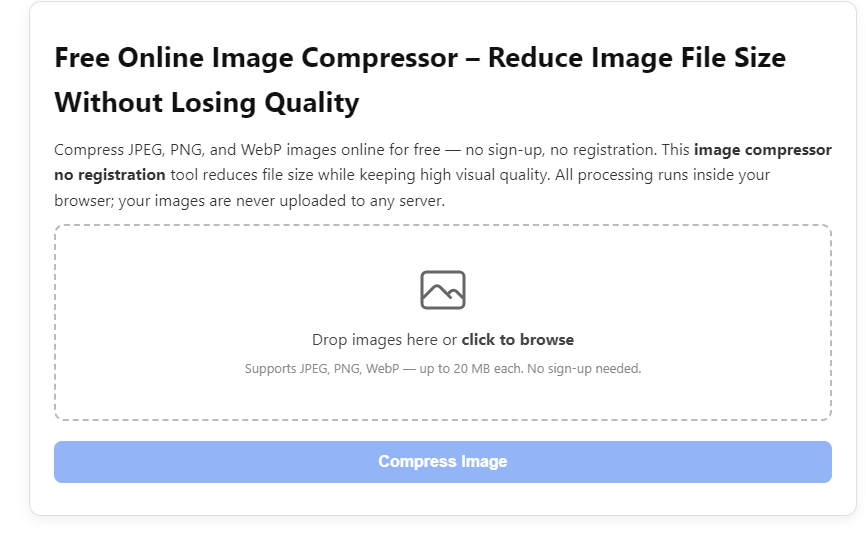
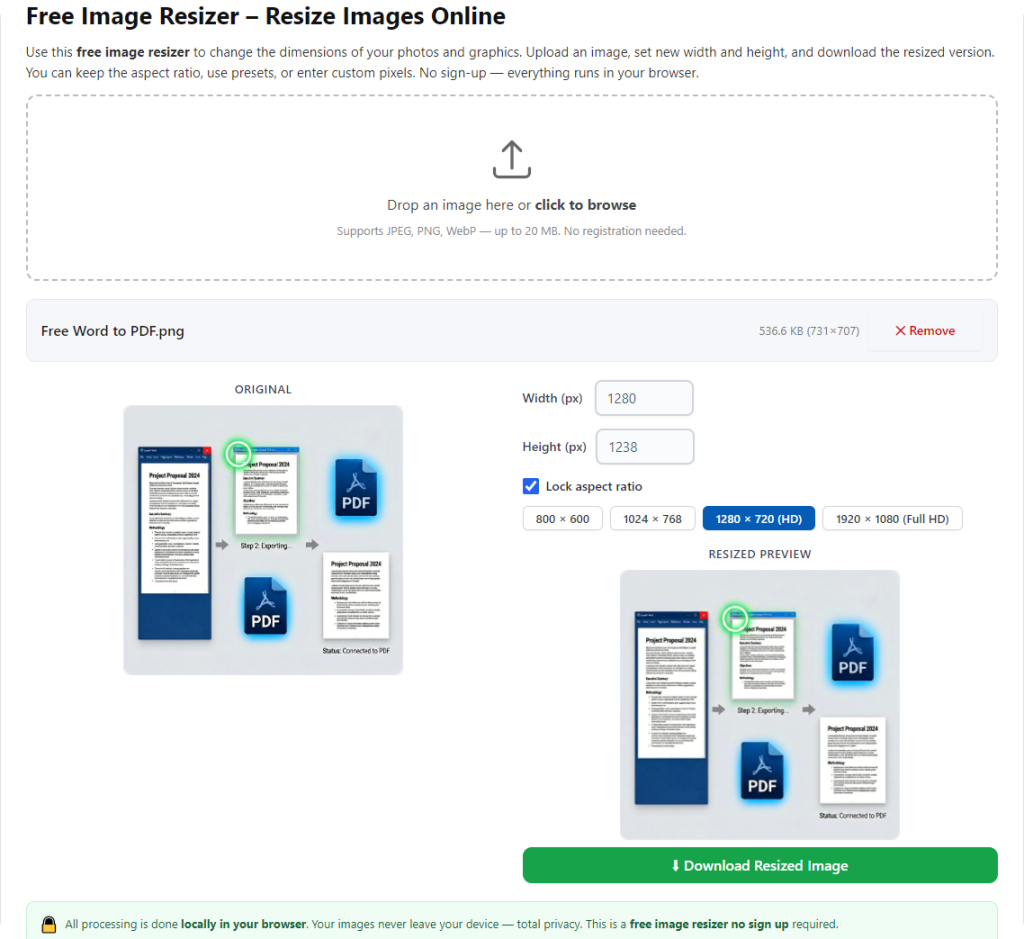
If you’re a website owner, content creator, social media manager, or just someone who stores hundreds of photos on your devices, you’ve definitely dealt with bulky JPG files. Standard JPG images take up massive storage space, slow down webpage loading speeds, and cause annoying upload delays on social platforms or cloud drives. Manually resizing and converting each photo one by one is incredibly time-consuming and often ruins image quality if you don’t have the right tool.
Most cheap or basic converters crush your photos’ details, leaving you with fuzzy, washed-out visuals that kill your content’s appeal. That’s why picking the best JPG to WebP converter to keep sharp image quality is non-negotiable for clean, fast, professional digital imagery for all your content needs.
WebP is Google’s modern image format built exclusively for web and digital use, delivering far smarter compression than traditional JPG files. It cuts image file sizes by up to 70% while locking in crisp, clear visual quality. Most basic converters sacrifice sharpness for smaller file sizes, but a top-rated JPG to WebP converter designed to keep sharp image quality avoids this common issue entirely.
Unlike single-image converters that waste your time, bulk compression tools let you process dozens or hundreds of JPG photos at once, cutting down hours of repetitive work. This hands-on guide will walk you through exactly how to use premium tools to retain perfect sharpness while batch optimizing your entire JPG photo library.
Why Quality-Focused JPG to WebP Conversion Beats Basic Compression
Before jumping into our step-by-step tutorial, let’s break down why investing in the best JPG to WebP converter to keep sharp image quality beats generic free compression tools. Most people stick with JPG out of habit, but the outdated format creates major hurdles for modern digital content. Generic compression tools use rigid, one-size-fits-all algorithms that strip fine photo details, blur text overlays, fade color gradients, and ruin sharpness in portraits and product shots. Quality-focused premium converters eliminate these flaws completely, balancing efficient bulk compression and flawless image clarity.
- Massive storage savings without quality drops: WebP files are far smaller than JPGs with identical visual quality. A 5MB JPG photo can shrink down to 1–1.5MB as a WebP file, freeing up tons of device and server storage. Premium tools compress data smartly instead of deleting visual details.
- Faster loading speeds for web and social content: Smaller image sizes mean faster webpage load times, smoother social media uploads, and quicker cloud syncs. This also improves user experience and search performance for website owners, all while keeping photos ultra-sharp.
- Preserves fine details and color accuracy: Many people fear compression blurs photos, but the best tools use smart lossless and optimized lossy compression modes. You get smaller files without fuzzy edges, washed-out colors, pixelation, or lost texture details in product shots and portraits.
- Effortless batch processing for large photo sets: Instead of converting one photo at a time, bulk tools let you upload entire folders of JPGs and process them all in one go, perfect for bloggers, store owners, and casual users with huge photo libraries.
Step-by-Step Guide: Use the Best JPG to WebP Converter to Keep Sharp Image Quality
This workflow works for all top-rated bulk JPG to WebP compression tools focused on sharp image retention. The process is beginner-friendly, requires no technical skills or professional editing experience, and guarantees consistent high-quality results every single time.
Step 1: Prepare Your JPG Image Files
First, organize all the JPG photos you want to compress and convert into a single folder on your computer or mobile device. This simple prep step makes bulk uploading seamless and avoids missing or duplicate files. Delete any blurry, duplicate, or unnecessary photos beforehand to keep your final optimized folder clean and organized. Working with a tidy folder structure also makes it easier to compare original and compressed photos for sharpness checks later.
Step 2: Upload Bulk JPG Files to the Converter
Launch your preferred high-quality JPG to WebP converter tool and locate the bulk upload section. Most premium tools feature a clear “Upload Files” or “Upload Folder” button front and center. For bulk processing, always select the folder upload option instead of single file upload. This lets you import every JPG in your target folder instantly, rather than selecting individual photos one at a time. Wait a few seconds for the tool to scan and load all your images—larger batches may take slightly longer, but the process is fully automated and won’t distort your images during upload.
Step 3: Customize Settings to Lock In Sharp Image Quality
This is the most critical step to balance tiny file sizes and crisp, sharp visuals. What sets thebest JPG to WebP converter to keep sharp image quality apart from generic tools is its customizable, precision settings. No more forced quality loss or over-compression—you get full control over how your JPGs convert to WebP, tailored exactly to your image type and use case.
- Compression mode selection: Choose lossless compression if you need pixel-perfect sharpness for professional photos, product images, website banners, and portfolio content. Opt for refined lossy compression for casual photos, social media content, or thumbnails to maximize file size reduction while retaining visible sharpness.
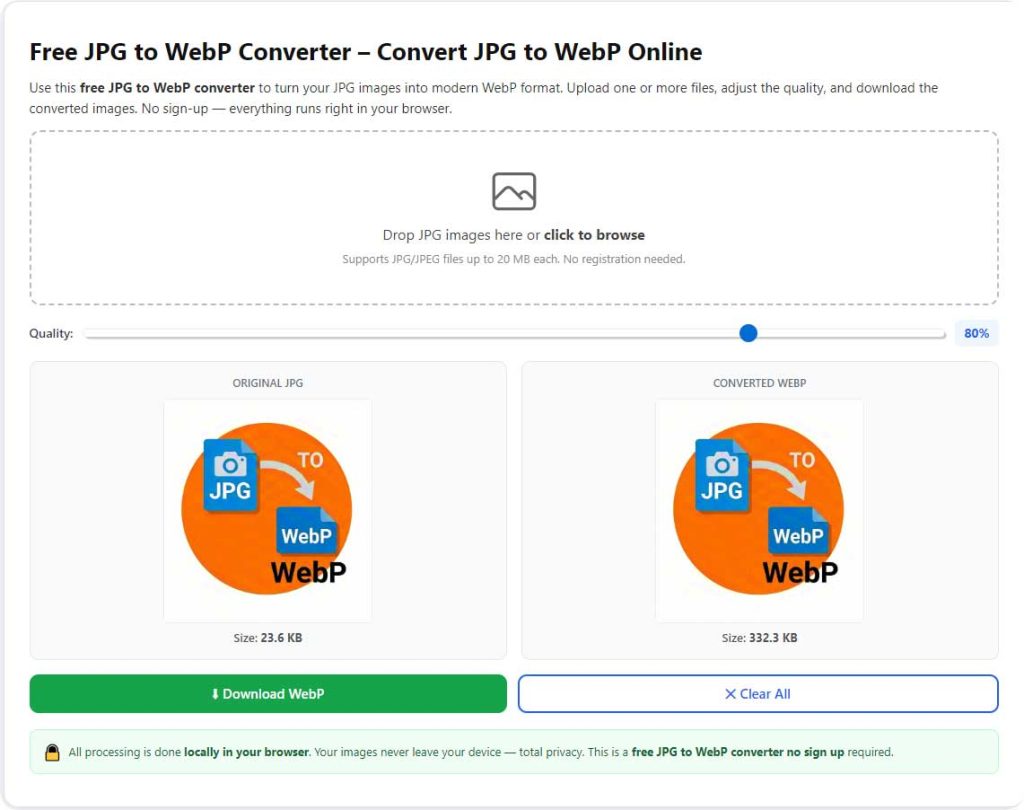
- Quality adjustment slider: Most top-tier tools feature a 0–100 quality slider. A setting of 75–85 delivers the best sweet spot—drastic size reduction with zero noticeable drop in sharpness, detail, or color quality.
- Resize options (optional): You can lock aspect ratios to resize all bulk images to a uniform dimension, which is perfect for consistent website imagery or social media posts. Locking ratios prevents stretched or distorted blurry photos.
Step 4: Start Bulk Compression and Conversion
Once your quality-focused settings are locked in, click the “Convert” or “Compress & Export” button to start the batch process. The tool will automatically compress and convert every uploaded JPG to WebP format in sequence while preserving every fine detail. You’ll see a real-time progress bar to track completion, and you can leave the tool running in the background while you handle other tasks. Unlike manual editing or low-quality converters, this process requires zero ongoing supervision and delivers uniformly sharp results.
Step 5: Download and Verify Sharp WebP Output Files
When the bulk conversion finishes, the tool will generate a single compressed folder containing all your new WebP images. Download the full batch folder directly to your device. Always double-check a few random images—especially detailed product shots, text graphics, and portrait photos—to confirm sharpness meets your standards. You’ll notice the files are significantly smaller while retaining crisp edges, vibrant colors, and original texture details. From here, you can upload them to your website, social media, cloud storage, or edit them further as needed.
Pro Tips to Keep Ultra-Sharp Quality With Bulk WebP Conversion
To get the absolute most out of your best JPG to WebP converter to keep sharp image quality and maintain flawless, ultra-crisp sharpness across every bulk batch, follow these simple pro tips. These actionable tricks ensure consistent, professional-grade results with every conversion, no guesswork required.
- Avoid over-compressing your images: It’s easy to chase the smallest file size possible, but cranking the compression too high ruins image clarity. Never drop your quality slider below 60. Sticking to the 75–85 range hits the perfect sweet spot, delivering smaller file sizes while keeping every photo crisp and detailed.
- Use folder uploads for all bulk jobs: If you’re processing ten or more images, always upload entire folders instead of single files. This ensures every photo uses the exact same quality settings, keeps your batch consistent, and saves you tons of manual clicking.
- Run a quick test batch first: Before processing your entire photo library, test your settings on 3–5 of your most detailed shots, like product photos, portraits, or text graphics. This quick check lets you tweak settings early and avoid a whole batch of low-quality conversions.
- Always lock your aspect ratio: When resizing images in bulk, make sure to enable the lock aspect ratio option. This prevents stretched, squashed, or distorted photos and keeps your original composition clean and professional every time.
- Separate professional and casual image batches: Don’t mix high-end portfolio or product images with casual lifestyle photos in one batch. Use lossless compression for professional work to preserve every detail, and mild lossy compression for everyday shots to maximize storage savings.
- Backup your original JPGs: Always keep your uncompressed original files in a separate folder. Top-tier converters deliver great sharpness, but having originals on hand lets you re-optimize images anytime for different project needs.
Common Mistakes to Avoid for Crisp WebP Results
Even when you’re using the best JPG to WebP converter to keep sharp image quality, small user errors can lead to dull, blurry WebP outputs. These mistakes are extremely common among new users, but they’re easy to avoid with basic awareness. Steering clear of these pitfalls guarantees every bulk conversion delivers clean, sharp, professional-grade WebP images every single time.
The number one mistake people make is prioritizing maximum compression over visual quality. It’s tempting to shrink files as much as possible to save storage or speed up websites, but aggressive compression strips fine details. You’ll end up with fuzzy product textures, blurry portrait features, and unreadable text on graphic assets. Another overlooked step is post-conversion quality checks. Bulk tools work fast and automatically, but spending 30 seconds spot-checking random images helps you catch odd formatting or soft-focused photos right away.
Most users also stick blindly to default converter settings, which is a huge mistake. Default modes are generic and built to work for “average” images, not your specific content. A setting that works fine for casual phone photos will often soften professional product shots. Taking just a moment to switch between lossless and lossy compression based on your image type makes a massive difference in final sharpness and overall content quality.
Wrapping Up
The best JPG to WebP converter to keep sharp image quality fixes one of the most frustrating pain points for content creators, website owners, and anyone managing large photo libraries. For years, users were forced to choose between smaller compressed file sizes and clear, sharp imagery—but premium quality-focused tools erase this compromise entirely.
Whether you’re optimizing images for an online store, blog, social media page, or personal cloud storage, this simple bulk workflow lets you leverage your best JPG to WebP converter to keep sharp image quality to optimize hundreds of JPGs quickly. You’ll preserve every original detail, vibrant color, and crisp edge while creating lightweight, web-ready WebP files that boost page speed and user experience. Once you experience quality-focused JPG to WebP conversion, you’ll never settle for blurry, low-quality image compression again.
After learning the operation method, click the link below to enter the tool page for immediate use.