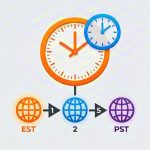
Making international calls comes with one persistent, frustrating challenge: unpredictable time zone differences. Many people accidentally dial overseas contacts in the middle of the night, disrupt personal rest hours, or miss critical business conversations due to simple timing errors. Guessing global time differences or relying on memory always leads to inconsistent scheduling results, especially when coordinating with partners, friends, or clients across multiple continents. Generic clock tools often fail to display accurate regional hours, ignore daylight saving adjustments, and lack call-focused features tailored for cross-border communication needs—making a dedicated time tool essential for anyone who regularly takes or schedules global calls.
This is why you need the best time zone converter for international calls for all your global communication planning. Unlike basic time tools built only for casual time checks, this specialized converter is designed specifically to solve international call scheduling pain points. It delivers precise real-time zone data, automatically accounts for global daylight saving changes, and simplifies cross-region time matching for calls, video meetings, and remote discussions. In this complete user guide, we will break down why standard time tools fall short for global calls, highlight the key features that make this the best time zone converter for international calls, and walk you through exactly how to use this tool to schedule flawless, interruption-free international communications every single time.
Why Generic Time Tools Fail for International Call Scheduling
Basic world clock tools and simple time zone converters work fine for quick time checks, but they lack the precision and functionality required for reliable international call planning. Most generic platforms only display static city times without accounting for dynamic adjustments that directly impact call accuracy. Daylight saving time shifts, regional time offset changes, and cross-date time differences are often overlooked, creating major scheduling errors for global callers.
Another common issue with standard tools is poor multi-region support. Many users coordinate calls between three or more countries, yet basic converters only allow side-by-side comparison for two locations. This limitation forces users to manually calculate gaps, estimate overlapping working hours, and double-check times across multiple tabs, which is inefficient and prone to human error. For professional business calls or important personal international conversations, these rough workarounds create unnecessary risk of missed or poorly timed interactions.
The best time zone converter for international calls eliminates all these common pain points by centering its design around call-specific functionality. Fully optimized for real-time global communication planning, it automatically adjusts for daylight saving rules worldwide, clearly displays overlapping active hours ideal for international calls, and removes all manual guesswork from scheduling. Every built-in feature is purpose-built to ensure your global calls always land at a convenient, appropriate time for all participating parties, no matter how far apart their locations are.
Key Features of the Best Time Zone Converter for International Calls
Not all time zone converters offer reliable support for international call planning. The best time zone converter for international calls stands out from generic world clock tools thanks to its unique, communication-focused features, all engineered to deliver consistent, trustworthy accuracy for every global calling and cross-border scheduling scenario.
- Global time zone accuracy with DST updates: This premium converter automatically recognizes daylight saving time adjustments for every supported region, ensuring your scheduled call times never fall out of sync with local real-world hours.
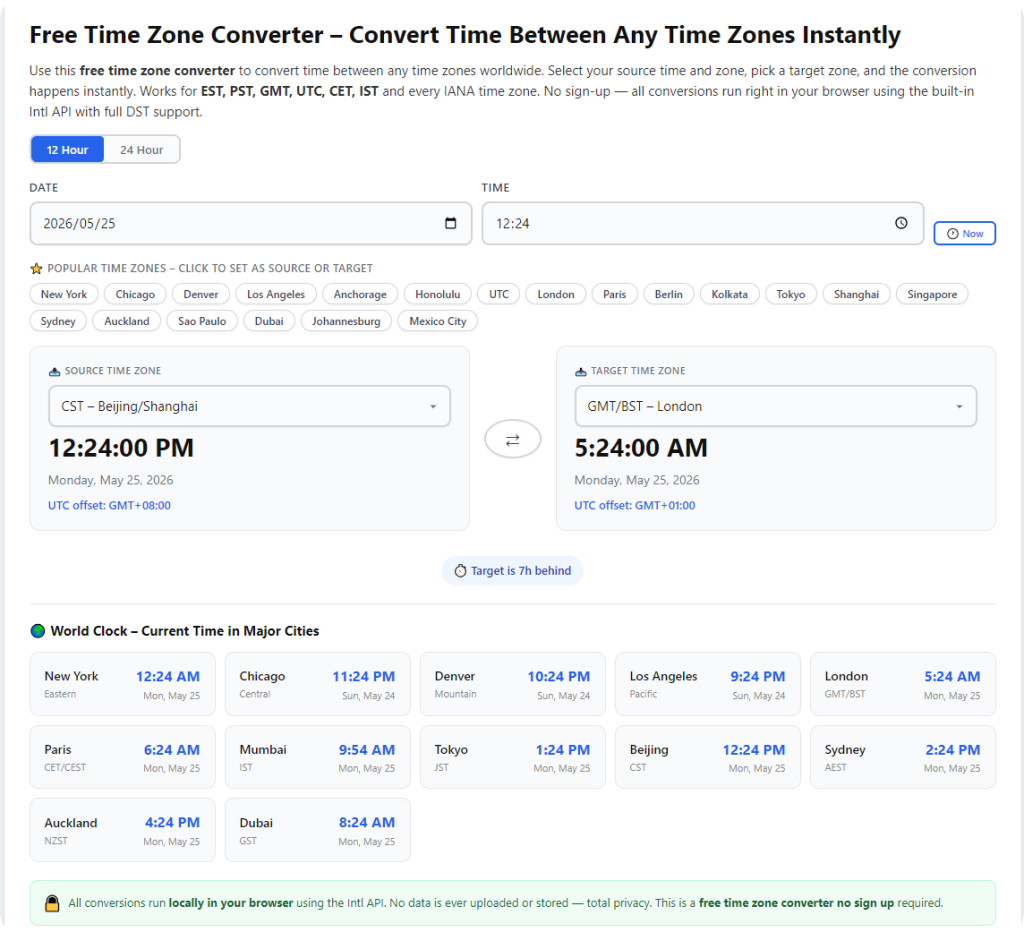
- Multi-location simultaneous comparison: Add dozens of global cities and time zones at once to compare overlapping availability for group international calls, remote team meetings, and multi-party global discussions.
- Clear time difference visualization: It displays exact hour and minute offsets between your local time and target international zones, making it easy to identify suitable calling windows instantly.
- Cross-date call detection: The tool flags time conversions that cross midnight and shift calendar dates, preventing schedule mix-ups that commonly happen with long-distance cross-continental calls.
- Custom time simulation: Adjust your local proposed call time to preview corresponding overseas hours, letting you test multiple schedules before locking in a final international call slot.
- Clean, call-focused interface: Free of unnecessary widgets, ads, or irrelevant features, the streamlined layout focuses entirely on time comparison and call scheduling for fast, stress-free use.
- Real-time clock synchronization: All displayed times update live to match global atomic clock standards, eliminating lag or outdated time data that could disrupt precise call planning.
Core Benefits for Personal and Business International Calling
Integrating thebest time zone converter for international calls into your daily routine completely transforms how you manage global communication, whether for casual personal connections or high-stakes professional business operations. This specialized tool delivers tangible, everyday benefits that save valuable time, reduce costly cross-border miscommunication, and help build consistent, reliable global professional and personal relationships.
First, it eliminates awkward timing mistakes. Calling an international contact during late-night or early-morning hours is not only unprofessional but also disruptive to personal relationships. This converter ensures you only initiate calls during reasonable local hours for your overseas counterparts, preserving courtesy and professionalism in every interaction.
Second, it maximizes productive overlapping working hours for global teams. For remote teams and international businesses, finding mutual working windows across different time zones is one of the biggest scheduling hurdles. The best time zone converter for international calls clearly highlights shared active hours across multiple regions, letting teams schedule productive, efficient meetings without forcing any participant to take inconvenient off-hours calls.
Third, it removes scheduling stress entirely. Instead of manually calculating time differences, cross-checking multiple websites, or second-guessing DST changes, you get instant, verified results. This streamlines planning for client calls, family check-ins, partner negotiations, and international interviews, making global communication seamless and efficient.
Step-by-Step Guide to Using the Best Time Zone Converter for International Calls
This simple, beginner-friendly workflow works seamlessly with every premium version of the best time zone converter for international calls. It takes less than one minute to master and guarantees precise, reliable scheduling results for all types of international calls, from quick personal check-ins to formal business conferences.
Step 1: Set Your Base Local Time Zone
Start by selecting your current city and local time zone as your primary reference point. This anchors all future conversions and ensures every international time calculation aligns with your real local time. Double-check your region selection to avoid baseline errors that can skew all scheduling results.
Step 2: Add Your International Call Locations
Input the cities or countries of your overseas call participants. The best tools support unlimited location additions, perfect for one-on-one international calls and large global team meetings alike. You can freely add, remove, or swap locations for different calling scenarios.
Step 3: Review Real-Time Time Differences
Check the live time display for each international location, including exact time offsets and current local dates. Pay close attention to cross-date differences and daylight saving status to avoid hidden scheduling errors that generic tools often miss.
Step 4: Simulate Proposed Call Times
Adjust your intended local call time to preview the corresponding time in every international location. Test multiple time slots to find the most balanced window where all participants receive the call during reasonable daytime or working hours.
Step 5: Confirm and Finalize Your Call Schedule
Once you find a suitable overlapping time, verify all time zone displays one final time. Use the confirmed time to schedule your international call, share meeting details, or initiate instant cross-border communication with full confidence in timing accuracy.
Common International Call Scheduling Mistakes to Avoid
Even when using the best time zone converter for international calls, small user oversights can lead to minor scheduling issues. Avoid these common, preventable errors to keep all your global calls perfectly timed, professional, and disruption-free.
Overlooking daylight saving time changes is the biggest mistake. Many regions shift their clocks seasonally, altering standard time offsets. Failing to account for these adjustments leads to misplaced calls and confused participants.
Ignoring cross-date time shifts also creates major problems. Calls scheduled late in your local day often fall on the next calendar day in overseas regions, which can confuse meeting deadlines and booking schedules.
Relying on static time difference charts is outdated and risky. Fixed offset data does not account for seasonal DST changes, while a live call-focused converter always delivers up-to-date, accurate timing.
Pro Tips to Optimize Your International Call Scheduling
Use these expert practical tips to maximize the value of the best time zone converter for international calls, streamline your global scheduling process, and build consistent, stress-free international communication habits for long-term use:
- Save frequent international locations: Keep your most common call regions saved for instant access, cutting down repetitive searching and speeding up routine scheduling.
- Prioritize overlapping working hours: Always schedule professional calls within mutual business hours to maximize engagement and avoid off-hours disruptions for global team members.
- Double-check DST before major calls: Quickly verify daylight saving status for all participant regions ahead of important client meetings or official international calls.
- Plan early for long-distance zone gaps: For extreme time differences, pre-plan call weeks in advance to accommodate limited overlapping availability across continents.
Final Thoughts
International communication success heavily relies on accurate time zone timing, yet most people still depend on outdated, generic time tools that create entirely avoidable scheduling mistakes. The best time zone converter for international calls resolves every common global scheduling pain point with precision-focused, call-optimized functionality built specifically for regular global users.
Whether you are managing regular international business calls, staying in touch with overseas family members, interviewing global job candidates, or coordinating remote cross-border team operations, this tool delivers fast, reliable time zone accuracy. It eliminates all scheduling guesswork, automatically accounts for seasonal daylight saving time changes, and ensures every international call takes place at a respectful, productive time for everyone involved. Stop risking mis-timed calls and missed global opportunities. Use the best time zone converter for international calls to streamline your global communication and schedule every cross-border interaction with consistent, perfect accuracy.
After learning the operation method, click the link below to enter the tool page for immediate use.